
Square Feet ↔ Linear Feet Calculator
Convert between square feet and linear feet for flooring, lumber, trim, and construction projects
Calculation Results
Square Feet and Linear Feet Measurements
In the world of construction, woodworking, and home improvement, accurate measurements are crucial for project success and cost efficiency. Understanding the difference between square feet and linear feet is fundamental to purchasing the right amount of materials and avoiding costly mistakes.
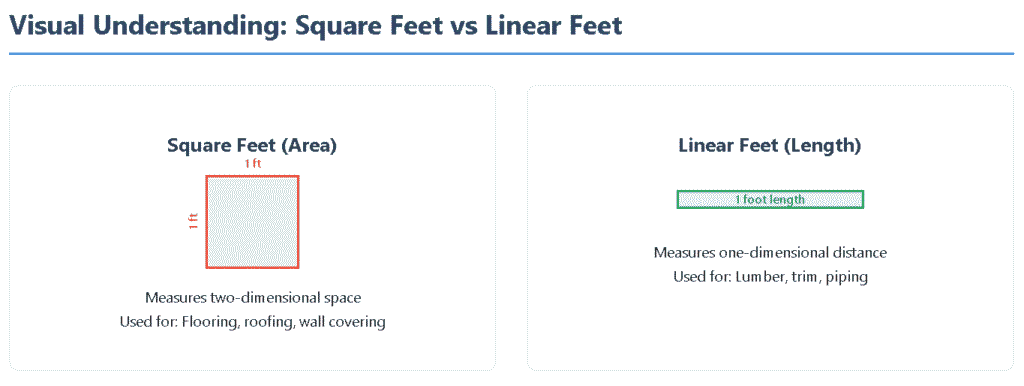
Square feet measure area (two-dimensional space), representing a square that is one foot long on each side. This measurement is used when you need to cover a surface, such as flooring, roofing, or wall covering.
Linear feet measure length in a straight line (one-dimensional distance), regardless of width or thickness. This measurement is essential for materials sold by length, such as lumber, trim, or piping 5.
The relationship between these two measurements depends on the width of the material being used. For example, a linear foot of flooring that is 12 inches wide covers exactly one square foot. However, if the same linear foot of material is only 6 inches wide, it would cover just 0.5 square feet. This crucial distinction means you cannot convert between these measurements without knowing the width of the material, which is why our calculator includes this essential variable in all calculations.
Real-world applications of these measurements vary significantly:
- Flooring projects: Calculate square footage of a room to determine how much flooring material you need, then convert to linear feet based on your chosen material’s width
- Fencing projects: Determine linear feet of fencing required based on perimeter length, then calculate square footage for coverage considerations
- Trim work: Measure linear feet needed for room perimeters where trim will be installed
- Lumber purchases: Convert between board feet (volume), square feet (surface area), and linear feet (length) depending on project requirements.
What is the Square Feet to Linear Feet Calculator?
Our Square Feet to Linear Feet Calculator is a sophisticated digital tool designed to simplify measurement conversions for professionals and DIY enthusiasts alike. This interactive calculator eliminates the guesswork from material estimation by providing instant, accurate conversions between area measurements (square feet) and length measurements (linear feet).
Unlike basic calculators that only handle one conversion direction, our tool offers bidirectional functionality allowing users to convert square feet to linear feet and linear feet to square feet with equal precision.
The calculator stands out from competitors through its user-centric design and advanced features. It incorporates material-specific guidance that automatically provides tailored advice based on the type of material selected (flooring, lumber, trim, etc.). The interface is optimized for seamless user experience with clear input fields, intuitive tab-based navigation, and real-time calculations that update as you type. The responsive design ensures full functionality across devices, from desktop computers to mobile phones, making it perfect for job site calculations.
How Our Calculator Works
Mathematical Foundation
At its core, our calculator operates on established mathematical principles that govern the relationship between length and area measurements. The conversion between square feet and linear feet is based on the fundamental area formula: Area = Length × Width. This formula is rearranged depending on the direction of conversion.
● For square feet to linear feet conversion, the formula is:
Linear Feet = Square Feet ÷ Width (in feet)
● For linear feet to square feet conversion, the formula is:
Square Feet = Linear Feet × Width (in feet)
These calculations assume that the material has a consistent width throughout, which is standard for most construction materials sold by length. The calculator automatically handles unit conversions, so if you input width in inches, it seamlessly converts to feet for accurate calculations.
How to Use the Calculator
Square Feet to Linear Feet Conversion
- Select the conversion direction: Click on the “Square Feet → Linear Feet” tab to ensure you’re in the right conversion mode.
- Enter square footage: In the “Square Feet” field, input the total area you need to cover. For example, if you’re flooring a 150 square foot room, enter “150”.
- Input material width: In the “Width” field, enter the width of your material. You can enter this measurement in feet or inches (our calculator automatically handles the conversion). For baseboards that are 3 inches wide, simply enter “3”.
- Select material type (optional): Choose your material from the dropdown menu for customized advice. If you’re working with trim, select “Trim/Molding” for specific recommendations about waste factors.
- View results: The calculator instantly displays your result in linear feet. For our example of 150 sq ft of 3-inch wide trim: 150 ÷ (3/12) = 600 linear feet.
Linear Feet to Square Feet Conversion
- Select the conversion direction: Click on the “Linear Feet → Square Feet” tab to switch conversion modes.
- Enter linear footage: In the “Linear Feet” field, input the length of material you have or plan to purchase. For example, if you have 350 linear feet of fencing, enter “350”.
- Input material width: In the “Width” field, enter the width of your material. For fencing boards that are 8 inches wide, enter “8”.
- Select material type (optional): Choose “Fencing” from the material dropdown for specific advice about installation considerations.
- View results: The calculator immediately shows your result in square feet. For our example of 350 linear feet of 8-inch wide fencing: 350 × (8/12) = 233.33 square feet of coverage.
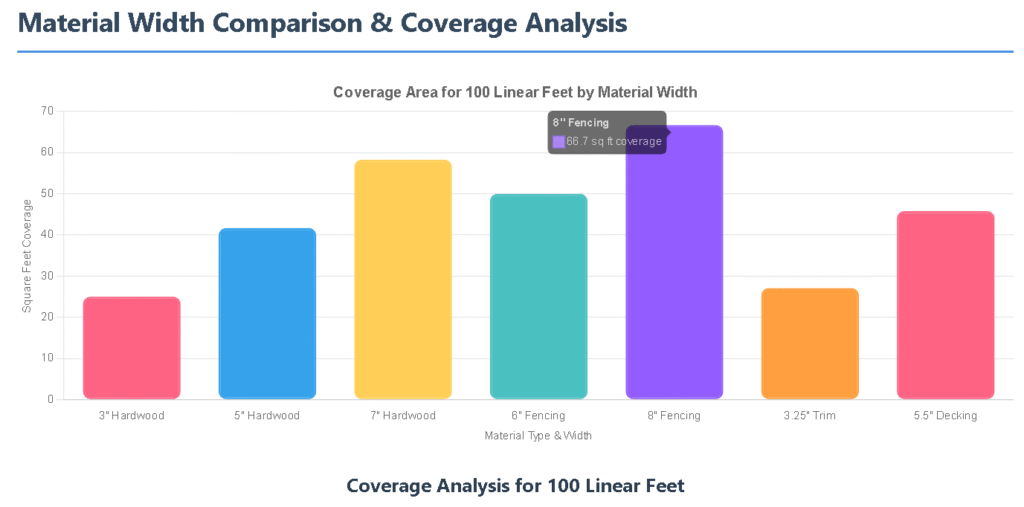
Table: Common Material Widths and Conversion Factors
| Material Type | Common Widths | Conversion Consideration |
|---|---|---|
| Hardwood Flooring | 3″, 5″, 7″ | Add 7-10% for waste |
| Drywall | 4 feet | Sheet goods calculated differently |
| Decking | 5.5″, 7.25″ | Account for spacing between boards |
| Trim/Molding | 2.25″, 3.25″ | Add 15% for complex cuts |
| Fencing | 6″, 8″ | Consider post space deductions |
Pre-Measurement Best Practices
- Measure twice, calculate once: Always double-check your room dimensions before inputting them into the calculator. Even small measurement errors can lead to significant material shortages or overages.
- Account for irregularities: For rooms with alcoves, bay windows, or other irregular features, break the space into regular shapes (rectangles, triangles) and calculate each area separately before summing them.
- Consider vertical space: For materials like siding or wall paneling, measure wall height and perimeter separately, then calculate total area before converting to linear feet.
- Document your measurements: Create a simple sketch of the space with all measurements clearly marked. This helps visualize the project and serves as a reference if questions arise later.
- Verify material widths: Actual material widths may differ from nominal sizes. For example, a board sold as “6 inches wide” may actually measure 5.5 inches. Always verify the actual width of your materials before calculating.
Calculation Strategies
1. Document your calculations: Save your calculator inputs and results for future reference. This creates a paper trail for project budgeting and helps with future similar projects
2. Batch calculations: If using multiple materials of the same width, calculate total square footage first, then convert to linear feet once instead of performing multiple separate calculations.
3. Factor in waste: Always add the recommended waste percentage (provided in our calculator’s material-specific guidance) to your final calculation. This accounts for cutting waste, pattern matching, and material defects.
4. Consider purchase units: Many materials are sold in specific lengths or bundles. Our calculator helps you determine total linear feet needed, which you can then use to determine how many bundles or pieces to purchase.
5. Verify with suppliers: Different suppliers may have slightly different calculation methods. Use our calculator as a reliable starting point, but confirm with your material supplier before making final purchases.
FAQ
Q: Why do I need to know the width to convert between square feet and linear feet?
A: Square feet measure area, while linear feet measure length. The width establishes the relationship between these two measurements. Without knowing the width, it’s impossible to accurately convert between the two units. A linear foot of a wide material covers more area than a linear foot of a narrow material
Q: How do I calculate linear feet for a room with multiple material widths?
A: Calculate each width separately. For example, if you’re using 5-inch wide planks in the main area and 3-inch wide border planks, calculate the square footage for each section separately, then convert to linear feet using the respective widths. Our calculator allows you to perform these calculations sequentially and sum the results.
Q: Can I use this calculator for metric measurements?
A: While our calculator primarily uses imperial measurements (feet and inches), you can easily adapt metric measurements by converting them first. Remember: 1 centimeter = 0.3937 inches, and 1 meter = 3.2808 feet. For regular metric users, we recommend taking measurements in meters, converting to feet, using our calculator, then converting back if needed.
Q: How do I measure irregularly shaped rooms for flooring?
A: Break the room into regular shapes (rectangles, triangles), calculate the area of each shape separately, then sum them to get total square footage. For curved areas, approximate with a series of rectangles or consult with a flooring professional for precise measurement techniques.
Q: Why is my actual material requirement different from the calculator’s result?
A: Our calculator provides precise mathematical conversions, but real-world installations often require additional material for waste, pattern matching, and irregular cuts. The material-specific guidance in our calculator recommends waste percentages to account for these practical considerations. Always purchase slightly more material than calculated to accommodate these factors.
Q: How do I measure linear feet for fencing?
A: Measure the linear distance around the perimeter where the fence will be installed. Subtract any gates or openings, but remember to account for additional posts and hardware. For sloping terrain, you may need additional material to follow the contour of the land.